Find a co-living space in Taiwan
Furnished rooms and flexible stays from co-living operators across the areas of Taiwan.
Furnished rooms and flexible stays from co-living operators across the areas of Taiwan.
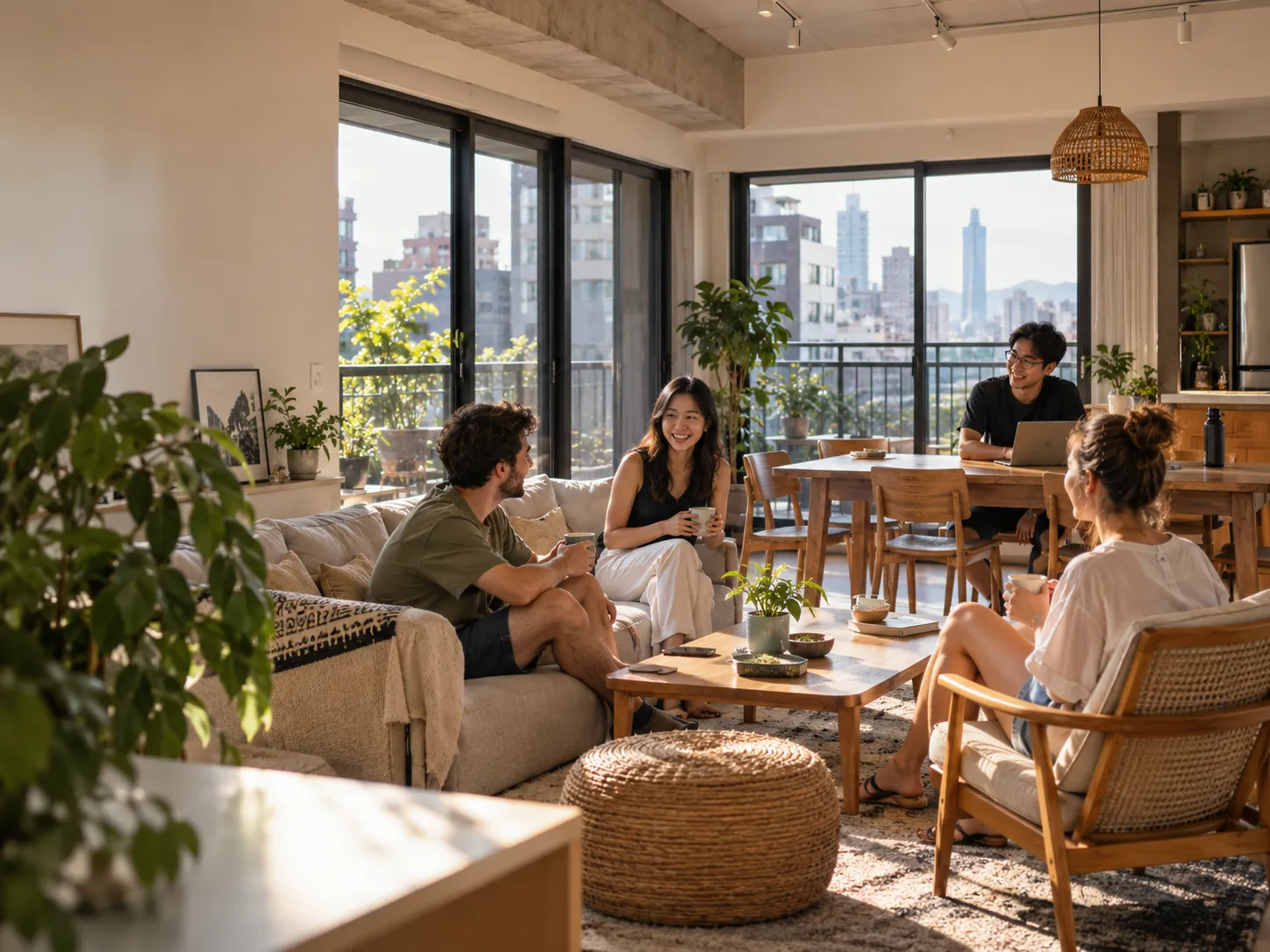
Co-living in Taiwan is a housing option where residents rent private bedrooms in a shared home or apartment, with common areas such as kitchens, living rooms, and sometimes coworking spaces. Many co-living spaces offer furnished rooms, shared utilities, and opportunities to meet people from different backgrounds.
It's particularly popular with expats, digital nomads, international students, and young professionals who want a comfortable place to live without buying furniture or signing a traditional long-term lease. Think of it as having your own room while keeping the possibility of making friends just a few steps away.
The cost of co-living in Taiwan depends on the city, location, room size, length of stay, and facilities included. Taipei is generally more expensive than cities such as Taichung, Tainan, or Kaohsiung. Private rooms in shared apartments can be more affordable than renting an entire apartment, especially for people staying for only a few months.
When comparing co-living prices, check whether electricity, water, Wi-Fi, cleaning, and other utilities are included in the rent. A room advertised at a lower price isn't necessarily the cheapest option once all the extras are added. Your wallet deserves a furnished room, too.
You can find co-living spaces and furnished rooms in several Taiwanese cities, including Taipei, New Taipei City, Taichung, Tainan, and Kaohsiung. Taipei is a popular choice for international professionals and digital nomads, while other cities can offer a different lifestyle, local culture, and potentially lower housing costs.
Browse the co-living spaces listed on Taiwan Housing to compare available options and find accommodation that suits your preferred city, budget, and length of stay. Before committing, confirm the exact address, availability, rental conditions, and facilities directly with the property manager.
Yes, foreigners can rent co-living spaces in Taiwan, subject to the property's rental conditions and the documents requested by the provider. Co-living can be a convenient option for expats, international students, remote workers, and newcomers who need a place to stay while settling into the country.
Depending on the property manager, you may be asked for identification, contact information, a deposit, or proof of your intended stay. Ask about accepted identification documents, payment methods, minimum rental periods, and whether a formal rental agreement is provided. A little paperwork now can save you a lot of awkward conversations later.
Many co-living spaces in Taiwan offer furnished private rooms with a bed, wardrobe, desk, and access to shared facilities. Some properties also provide kitchen equipment, laundry facilities, Wi-Fi, cleaning services, and communal work or relaxation areas.
However, the exact setup varies between properties. Check whether bedding, kitchen utensils, towels, and other essentials are included before moving in. The goal is to arrive with your suitcase, not to spend your first weekend shopping for a mattress and a rice cooker.
Some co-living providers in Taiwan accept monthly rentals, while others require a minimum stay of three, six, or twelve months. Flexible rental terms make co-living particularly attractive for digital nomads, business travelers, exchange students, and people who are still deciding where they want to live.
If you need accommodation for one month or less, confirm the minimum stay, total price, deposit policy, and check-in and check-out arrangements before booking. Availability and conditions vary by property, so contact the provider directly to find a suitable option.
Co-living can be more economical than renting an entire apartment, particularly if you live alone or stay in Taiwan for a short period. You pay for a private room rather than a whole property, and some providers include utilities, Wi-Fi, furniture, and shared amenities in the monthly rent.
On the other hand, renting a private apartment may offer better value for couples, families, or people planning a longer stay. Compare the total monthly cost, including utilities, deposits, management fees, and furniture, rather than looking at the advertised rent alone. The cheapest option is the one that fits your actual needs, not necessarily the one with the smallest number on the listing.
Co-living can be a great option for digital nomads working remotely in Taiwan. A furnished room, internet access, shared facilities, and flexible rental terms can make it easier to settle in without committing to a long-term apartment lease. Living with other residents can also help you build a social network in a new city.
Before choosing a property, check the Wi-Fi speed, availability of a desk, noise levels, privacy, and proximity to cafés, public transport, and coworking spaces. Also verify that your immigration status permits your intended stay and remote-working arrangements. Fast internet is wonderful, but it doesn't replace the right visa.
A shared apartment in Taiwan typically means renting a private room in a property where you share facilities such as the kitchen or bathroom with other tenants. Co-living offers a similar arrangement but may include additional services, furnished communal spaces, flexible rental packages, organized activities, or a community-oriented living experience.
The distinction isn't always clear-cut, and some properties use the terms interchangeably. Rather than relying on the label, compare the room, shared facilities, included services, house rules, rental agreement, and overall cost to see what you are actually getting.
Before renting a co-living space in Taiwan, confirm the monthly rent, deposit, minimum stay, utility costs, included furniture, internet access, shared facilities, and cancellation policy. Ask whether the bedroom is private, which areas are shared, how cleaning is handled, and whether guests are allowed.
You should also verify the property's location, transportation options, rental agreement, and the identity of the person or company managing the accommodation. If possible, view the room in person or request a live video tour. A few questions before paying a deposit are much easier than discovering that your dream room comes with a surprise roommate who has eight legs.
Yes, co-living can be a practical housing option for international students, new expats, and people relocating to Taiwan. Furnished rooms can reduce the effort and upfront expense of setting up a home, while shared common areas provide opportunities to meet other residents and learn about life in Taiwan.
Students should check the distance to their university, public transport connections, rental duration, and whether the accommodation meets their budget. Newcomers may also prefer a furnished room while exploring neighborhoods before deciding whether to rent a private apartment for the long term.
Start by browsing the co-living spaces listed on Taiwan Housing and comparing their locations, room types, prices, facilities, and rental conditions. Shortlist properties that match your budget and preferred length of stay, then contact the property manager to confirm availability and ask any remaining questions.
Before making a payment, clarify the deposit, rental agreement, check-in arrangements, and cancellation terms directly with the provider. Listing availability and booking procedures may differ between properties, so make sure you understand the process for your chosen room before committing.
Bilingual real estate agents to help you rent or buy a home.
Companies managing rental properties, with listings ready to move in.


